
Best Natural Shampoo for Damaged Hair

When hair starts to feel rough, brittle, or harder to manage than usual, your shampoo is often the first place to look. Finding the best natural shampoo for damaged hair can make a real difference, especially if your strands have been stressed by heat styling, color treatments, dry weather, or harsh cleansers.
Damaged hair usually does not need more stripping, more fragrance, or more complicated steps. It needs a gentler routine that helps cleanse without leaving hair feeling even drier. That is why many people switch to natural shampoo formulas with plant-based ingredients, fewer harsh additives, and a more balanced approach to scalp and strand care.
What damaged hair really needs
Hair damage can show up in small ways at first. Maybe your ends feel crunchy, your hair tangles more easily, or your usual shine is gone. Over time, you may also notice frizz, breakage, split ends, or a texture that feels dull and thirsty no matter what styling product you use.
A good shampoo cannot repair every kind of damage on its own, but it can stop making the problem worse. That matters more than many people realize. If your cleanser is too aggressive, it can strip away the natural oils that help protect the hair shaft. That leaves already stressed hair more vulnerable.
The best natural shampoo for damaged hair should do two things well. First, it should cleanse the scalp and hair without that squeaky, over-washed feeling. Second, it should support softness and moisture so hair feels smoother and more comfortable after washing.
How to spot the best natural shampoo for damaged hair
Not every shampoo labeled natural is automatically a great fit for dry or damaged strands. Some are still too strong for fragile hair, while others may be too heavy for fine textures. The right choice depends on your hair type, your scalp, and how much damage you are trying to manage.
In general, gentler formulas are a better place to start. Look for shampoos that focus on botanical ingredients, mild cleansing agents, and moisture-supporting oils or plant extracts. Aloe vera, coconut-derived cleansers, chamomile, argan oil, jojoba oil, shea butter, and oat-based ingredients are often good signs for dry, stressed hair.
It also helps to pay attention to what is not in the bottle. Many shoppers looking for cleaner haircare prefer formulas without harsh sulfates, synthetic-heavy fragrances, or other ingredients that can leave the scalp irritated and the hair feeling stripped. If your hair is color-treated, this becomes even more important, since harsh washing can speed up fading and dryness.
That said, natural does not always mean perfect for everyone. If you have a very oily scalp, product buildup, or fine hair that gets weighed down easily, a rich shampoo may feel like too much. In that case, you may still want a natural formula, but one with lighter hydration and a cleaner rinse.
Ingredients that help and ingredients to question
When hair is damaged, ingredient choice matters because every wash either supports recovery or adds stress. Helpful ingredients usually fall into two groups: gentle cleansers and nourishing conditioners.
Gentle cleansers remove oil and buildup without pulling too much moisture from the hair. These are especially helpful if you wash often. Nourishing ingredients, on the other hand, help hair feel softer, smoother, and less prone to tangling. Plant oils, herbal extracts, and moisture-rich ingredients can all support that goal.
A few ingredients are especially popular in natural shampoos for damaged hair. Aloe can help bring a soothing, hydrating feel. Argan and jojoba oils are often chosen for softness and shine. Coconut-derived ingredients can help cleanse in a gentler way than more aggressive detergents. Lavender, rosemary, and chamomile are also common in wellness-focused formulas because they add a fresh, botanical feel while supporting a more natural self-care routine.
On the other side, it is worth being cautious with shampoos that rely heavily on harsh sulfates or formulas loaded with unnecessary synthetic additives. Some hair types tolerate those just fine, but damaged hair usually does better with a softer touch.
The trade-off with natural shampoo
There is one thing shoppers should know before switching. A natural shampoo may not create the big, foamy lather you are used to from conventional formulas. That does not mean it is not working. In many cases, it simply means the cleanser is milder.
You may also notice a short adjustment period, especially if your previous routine included silicone-heavy or highly fragranced products. Hair can feel a little different at first while buildup washes away and your scalp adjusts. For some people, that transition is quick. For others, it takes a couple of weeks.
This is why the best natural shampoo for damaged hair is not always the richest or the most expensive one. It is the one that leaves your scalp clean, your hair softer, and your routine easier to stick with over time.
Choosing the right formula for your hair type
If your hair is fine and damaged, look for lightweight moisture. You want softness and protection without flattening your hair at the roots. A natural shampoo with aloe, herbal extracts, or light plant oils may be a better fit than a very buttery formula.
If your hair is thick, coarse, curly, or extra dry, richer hydration can be helpful. Creamier shampoos with oils and moisture-supporting botanicals often leave these hair types feeling smoother and more manageable.
If you have a sensitive scalp, simplicity matters. Choose a formula with a shorter ingredient list, gentle cleansing agents, and a mild scent profile. Scalp comfort plays a big role in overall hair health, and irritation can make damaged hair feel even harder to manage.
If your hair is color-treated, look for a natural shampoo that cleanses gently and helps preserve moisture. Color processing can weaken hair, so a softer formula usually supports better texture and shine between appointments.
Your shampoo matters, but your routine matters more
Even the best natural shampoo for damaged hair works best as part of a fuller routine. If hair is constantly exposed to hot tools, rough towel drying, or frequent chemical processing, shampoo can only do so much.
A few simple changes can help your shampoo do its job better. Wash with lukewarm rather than very hot water. Follow with a conditioner that supports moisture and slip. Limit heat when you can, and use a wide-tooth comb on wet hair to reduce breakage.
It also helps to space out washes if your scalp allows for it. Overwashing can leave damaged hair drier, especially in colder months or low-humidity climates. For many people, less frequent washing paired with a gentler formula creates a healthier balance.
When a product-forward routine makes sense
If you are trying to move toward cleaner beauty, start with the products you use most often. Shampoo is one of the easiest swaps because it touches both your scalp and hair on a regular basis. Choosing a natural option can support healthier hair and help reduce daily exposure to harsher ingredients.
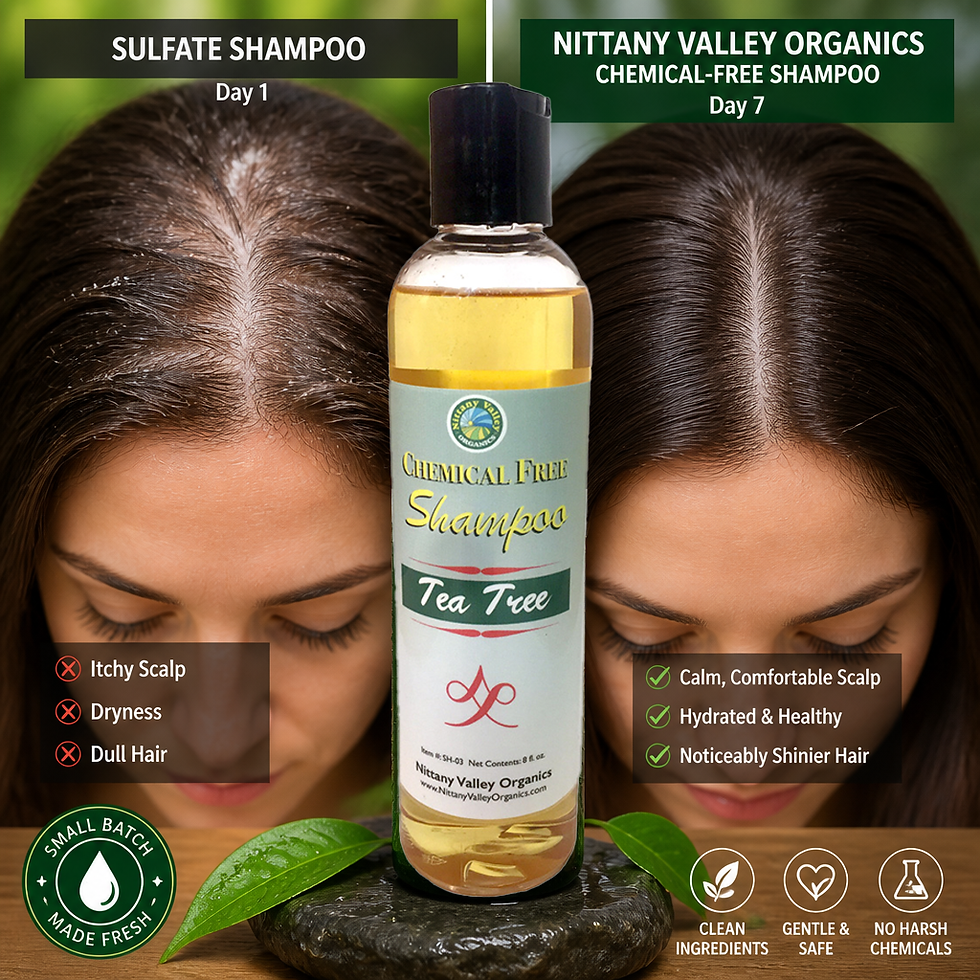
This is where a wellness-focused brand can make the process feel easier. Instead of piecing together a routine from different places, many shoppers prefer to build a more natural self-care lineup that fits together clearly and simply. Brands like Nittany Valley Organics speak to that shift by offering organic personal care options designed around healthier everyday habits, without harsh chemicals or synthetic ingredients.
What results should you expect?
A natural shampoo is not a miracle fix for split ends or severe breakage. Some damage needs trimming, and some hair needs time. But the right shampoo can absolutely help hair feel softer, calmer, and easier to manage after each wash.
Over time, many people notice less dryness, smoother texture, better shine, and fewer tangles. Those are meaningful changes, especially if your old routine kept leaving your hair tight, frizzy, or dull.
The biggest sign that you have found the right formula is consistency. Your scalp feels comfortable. Your hair feels clean but not stripped. Styling becomes easier. And your routine starts to support healthier hair instead of working against it.
If your hair has been asking for a reset, a gentler shampoo is a smart place to begin. Small changes in your daily routine often lead to the healthiest, most lasting results.


Comments