
How to Layer Organic Haircare Products

If your hair feels heavy by noon, frizzy by dinner, or somehow both at once, the issue may not be your products at all. More often, it is the order. Knowing how to layer organic haircare products can make the difference between hair that looks coated and hair that feels soft, balanced, and naturally healthy.
Organic haircare tends to be gentler, more plant-based, and free from many of the harsh chemicals found in conventional formulas. That is a big part of the appeal. But gentler formulas also ask for a little more intention. You cannot always pile on product and expect a polished result. The right sequence helps each step do its job without weighing hair down or leaving the scalp feeling neglected.
Why layering matters with organic haircare
Hair products do not all work in the same way. Some cleanse, some soften, some seal in moisture, and some create light hold or smooth the outer layer of the hair. When they are applied in the wrong order, even high-quality formulas can compete with each other.
This is especially true when you are using organic products without synthetic fillers or heavy silicones. These formulas often feel cleaner on the hair, but they rely more on thoughtful application. A lightweight botanical mist may need to go on before a richer cream. A nourishing oil can help seal in hydration, but too much too soon may block everything applied after it.
The goal is simple - start with what needs to reach the hair or scalp first, then follow with products that moisturize, protect, and finish.
How to layer organic haircare products in the right order
A good routine starts before styling. Layering is not just about what happens after the shower. It begins with clean hair, a balanced scalp, and products matched to your texture.
Step 1: Start with a clean scalp and hair
Your shampoo is the foundation. If the scalp is coated with oil, sweat, or leftover styling products, anything you apply afterward has a harder time working well. Organic shampoo helps cleanse without stripping away every bit of natural moisture, which is helpful if your hair is dry, color-treated, curly, or easily irritated.
Massage shampoo into the scalp first instead of scrubbing the full length of the hair. Let the lather move through the ends as you rinse. That is usually enough to refresh the lengths without over-drying them.
Step 2: Follow with conditioner where you need it most
Conditioner belongs mainly on the mid-lengths and ends unless your scalp is especially dry. This is where many people overdo it. If you apply a rich conditioner heavily at the roots, the rest of your styling routine can start from a weighed-down place.
Let the conditioner sit for a minute or two so plant oils, butters, and moisturizing ingredients have time to soften the hair. Then rinse thoroughly. Hair should feel smooth, not slick.
Step 3: Add leave-in moisture on damp hair
This is where most layering routines either work beautifully or go off track. Leave-in products should usually be applied to damp hair, not soaking wet and not fully dry. Damp hair gives the product enough water to spread evenly and support hydration.
If you use a lightweight leave-in conditioner, detangling spray, or moisture mist, this goes on first after washing. These thinner formulas are meant to absorb quickly. They prep the hair and help reduce friction before you add anything richer.
Step 4: Use creams or stylers based on your hair type
After a leave-in comes your cream, curl product, or smoothing styler. Think of this as the treatment layer that shapes the way your hair will look and feel as it dries.
Fine hair usually does better with a small amount of lightweight styling cream or lotion. Thick, curly, coarse, or very dry hair often benefits from a slightly richer layer. The trade-off is simple - the more moisture and definition you add, the more careful you need to be with quantity. Too little may not control dryness. Too much may flatten your style.
A good rule is to start smaller than you think you need. You can always add a little more to the driest areas.
Step 5: Seal with oil only if your hair needs it
Hair oil is often treated like a must, but it is not always necessary. If your leave-in and styling product already provide enough softness, adding oil may be too much. If your ends are dry, your hair is textured, or your routine needs more shine and frizz control, a few drops of a lightweight organic oil can help finish the look.
This final layer works best on the ends or outer surface of the hair. Applying too much oil near the scalp can make clean hair look greasy fast. Oils seal, so they belong later in the routine, after water-based moisture has already been applied.
Adjust your layering routine by hair type
There is no single formula that works for everyone. The best answer to how to layer organic haircare products depends on your texture, density, porosity, and even the season.
If your hair is fine or straight, less is often more. A clean shampoo, a light conditioner, a spray leave-in, and a small amount of styling product may be all you need. Rich butters and heavier oils can make fine hair feel limp.
If your hair is wavy, you may need balance more than anything else. Enough moisture helps control frizz, but too much can soften the wave pattern. Lightweight leave-ins and flexible stylers tend to work well here.
If your hair is curly or coily, layering usually matters even more because moisture retention is a constant concern. A leave-in followed by a cream and then a light oil can support softness and definition. Still, it depends on how your hair responds. Some curls love richer layering. Others do better when buildup is kept minimal.
If your scalp is sensitive or dry, focus on gentle cleansing and avoid piling heavy styling products directly at the root. Healthy-looking hair starts with a scalp that feels comfortable and balanced.
Common layering mistakes to avoid
The most common mistake is using too many products that do the same job. If your leave-in is rich, your cream is rich, and your oil is rich, the result may be dull, coated hair rather than healthy shine.
Another issue is applying products in the wrong order. Water-based formulas generally go before oils. Lightweight products usually come before thick ones. When the sequence gets reversed, absorption can suffer.
It is also easy to confuse dryness with damage or frizz with lack of hold. If your hair feels rough, you may need more moisture. If it loses shape quickly, you may need a better styling layer rather than a heavier conditioner. Paying attention to what your hair is actually doing helps you buy and use products more wisely.
Finally, do not judge a routine too quickly. Organic haircare can feel different if you are transitioning away from conventional products with synthetic coatings. Give your hair a little time to adjust, especially if you are simplifying your routine and choosing cleaner ingredients.
How to build a simpler organic routine that works
The healthiest routine is not the longest one. It is the one you will actually keep up with. For many people, that means choosing a few well-matched organic products instead of a crowded shelf.
Start with a shampoo and conditioner that support your scalp and texture. Then add one leave-in or detangler and one styling product that fits your goals, whether that is softness, curl definition, smoother ends, or light hold. Add oil only if your hair consistently needs that final seal.
This approach keeps your routine easy to follow and makes it much easier to tell what is helping and what is not. It also supports a cleaner, more natural self-care rhythm without harsh chemicals or synthetic ingredients getting in the way.
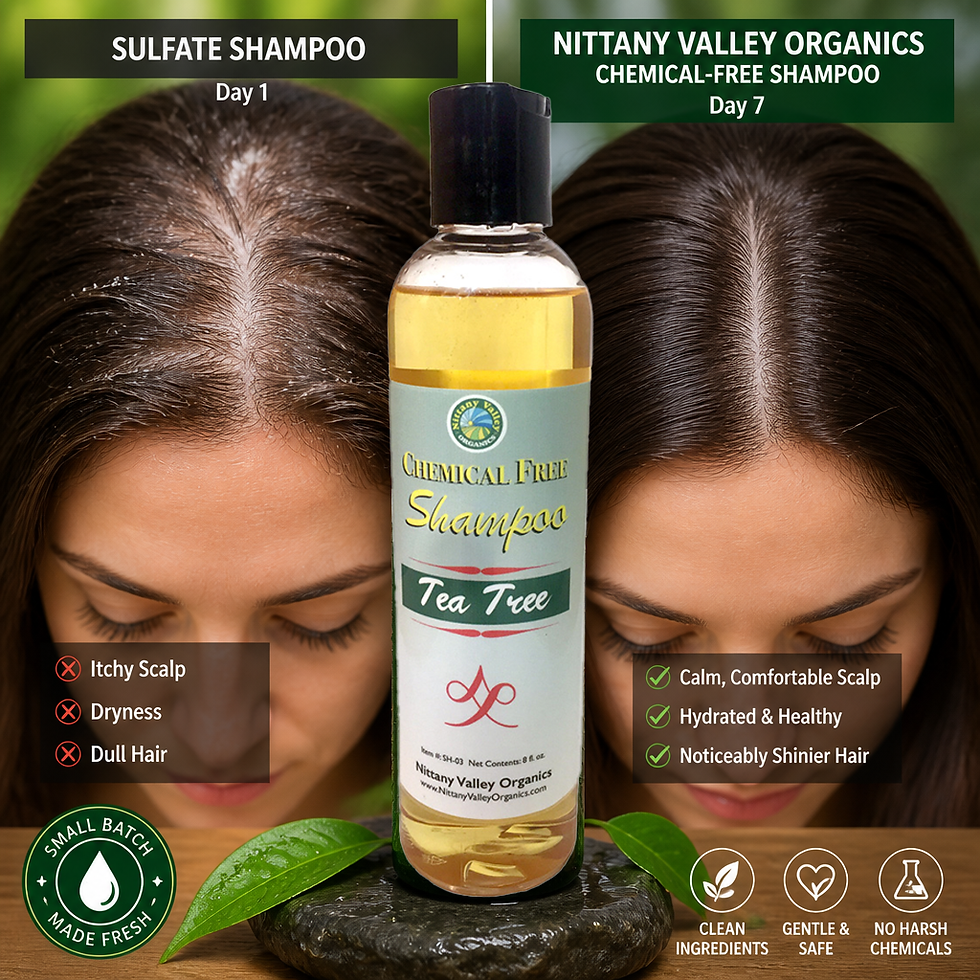
For shoppers moving toward a more ingredient-conscious routine, this is where a wellness-focused brand like Nittany Valley Organics fits naturally. A curated organic lineup makes it easier to mix categories thoughtfully instead of guessing your way through products that were never designed to work together.
When to change your layering routine
Hair is not static. Summer humidity, winter dryness, hard water, heat styling, and color treatments can all affect how your products perform. A routine that works in April may feel too heavy in July or not moisturizing enough in January.
That is why it helps to think of layering as flexible rather than fixed. In humid weather, you may pull back on creams and oils. In colder months, you may need more leave-in moisture and extra attention on the ends. If your scalp becomes oily faster than usual, simplifying your routine can help reset the balance.
The best organic haircare routine should feel fresh, not fussy. When products are layered in the right order, hair often becomes easier to manage, softer to the touch, and more naturally radiant without needing a dozen steps.
Healthy hair does not always need more product. Sometimes it just needs the right product, in the right order, with a little room to breathe.


Comments