
Organic Hair Care Guide for Healthier Hair

Some hair looks dull no matter how much product you use. Other hair feels dry at the ends and oily at the roots by the next morning. If that sounds familiar, an organic hair care guide can help you simplify your routine and focus on what your hair actually needs instead of layering on more formulas.
Healthy hair usually starts with a healthier scalp, gentler cleansing, and ingredients that support moisture without harsh chemicals or synthetic ingredients. That does not mean every bottle labeled natural will work the same way, and it does not mean your routine has to become complicated. In most cases, the best organic routine feels simpler, cleaner, and easier to stick with.
What an organic hair care guide should help you do
A good organic hair care guide is not just a product checklist. It should help you understand how to choose better formulas, how often to wash, and how to balance cleansing with moisture. It should also make space for real life. Your climate, styling habits, hair texture, and scalp condition all affect what works best.
Organic hair care is often appealing for one simple reason - many people want healthier hair and scalp support without relying on sulfates, heavy synthetic fragrance, or a long list of harsh additives. For some shoppers, the goal is reducing irritation. For others, it is keeping hair soft, shiny, and manageable with plant-based ingredients that feel more in line with a natural lifestyle.
That said, organic does not mean one-size-fits-all. Fine hair may need lightweight hydration, while thick or curly hair often needs richer moisture and less frequent washing. If your scalp is sensitive, essential oils may feel soothing in one formula and too strong in another. Reading ingredients and paying attention to your own results matters more than trends.
Start with your scalp, not just your strands
When hair feels off, the scalp is often part of the story. A dry, tight, itchy, or flaky scalp can make even healthy hair look tired. On the other hand, an overly stripped scalp may respond by producing more oil, which leaves roots greasy faster.
The first step is choosing a cleanser that removes buildup without leaving your scalp squeaky or irritated. Hair should feel clean, but not rough. If your shampoo leaves you rushing for extra conditioner every time, it may be too aggressive for regular use.
A gentler organic shampoo can support a more balanced scalp while helping preserve your hair's natural softness. This is especially helpful if you wash several times a week, live in a dry climate, color your hair, or heat style often. Hair that is already under stress usually responds better to a softer approach.
How to choose organic shampoo and conditioner
The best shampoo and conditioner pairing depends on how your hair behaves between wash days. If your roots flatten quickly and your ends stay fairly smooth, choose lighter formulas that cleanse well without coating the hair. If your hair feels rough, frizzy, or thirsty after washing, look for more nourishing ingredients that help seal in moisture.
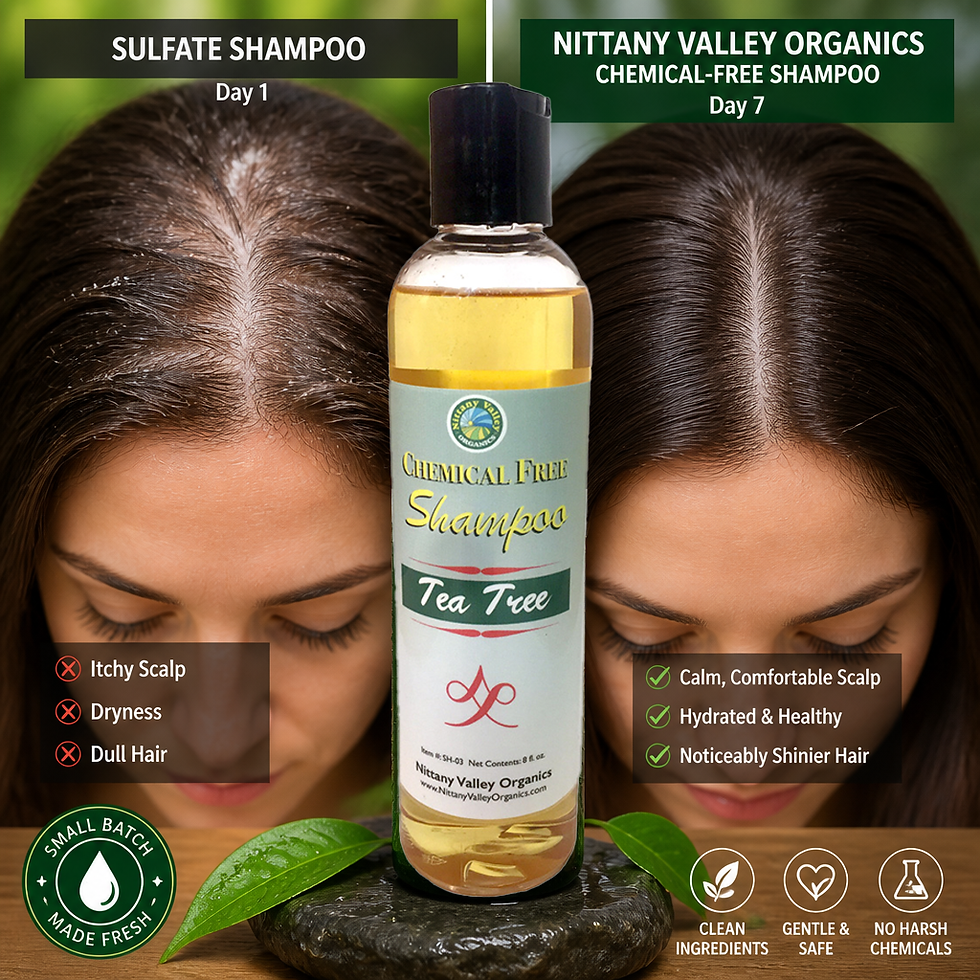
Plant oils, botanical extracts, aloe, and gentle cleansers can all play a role in an organic routine. The benefit is not just what is included, but what is left out. Many people notice that avoiding harsh chemicals and synthetic ingredients leads to a scalp that feels calmer and hair that is easier to manage over time.
Conditioner should be treated as support, not an afterthought. The right one adds slip, softness, and protection, especially through the mid-lengths and ends where dryness shows up first. If your hair gets weighed down easily, apply less and keep it away from the roots. If you have curls, coils, or thicker texture, you may need a richer amount and a little extra time before rinsing.
Build an organic hair care routine that fits your hair type
There is no perfect schedule that works for everyone. A better goal is creating a rhythm your hair responds to consistently.
For fine or easily oily hair
Wash more regularly with a gentle shampoo that cleans without over-drying. Keep conditioner light and focused on the ends. Heavy oils and rich masks may sound nourishing, but they can make fine hair look flat within hours.
For dry, thick, curly, or textured hair
Wash less often and protect moisture carefully. Richer conditioners and occasional deep treatments can help maintain softness and reduce frizz. Curly and textured hair often benefits from less aggressive cleansing because natural oils do not travel down the hair shaft as easily.
For sensitive scalps
Keep the routine simple. Too many products, too much fragrance, or frequent switching can make irritation harder to track. A calm, consistent routine often works better than a shelf full of treatments.
For color-treated or heat-styled hair
Focus on moisture retention. Even a clean formula can feel too strong if you are washing too often or using high heat daily. Lowering wash frequency when possible and using nourishing conditioner can help hair look smoother and feel less brittle.
Common mistakes people make when switching to organic hair care
One of the biggest mistakes is expecting instant transformation. If your hair is used to heavier silicones or strong cleansers, the first few washes with a gentler formula may feel different. That does not always mean the product is wrong. Sometimes your scalp and strands need a little time to rebalance.
Another mistake is using too much product. Organic formulas can still be rich, and more is not always better. Start with a moderate amount, especially with conditioner and leave-in products, then adjust based on your hair density and length.
People also tend to change everything at once. When you swap shampoo, conditioner, styling cream, and wash frequency in the same week, it becomes hard to tell what is helping. A gradual transition gives you clearer feedback.
Hard water, weather, and styling tools are easy to overlook too. If your hair still feels dry after switching to cleaner products, the issue may not be the shampoo alone. Seasonal air, hot showers, and daily blow-drying can all work against moisture.
What to look for on the label
Reading the front of the bottle only tells part of the story. Terms like natural and clean can be used loosely, so ingredient awareness matters. You do not need to become a chemist, but it helps to look for formulas centered on plant-based, organic-minded ingredients and a shorter, more intentional ingredient list.
If you are shopping for a routine that supports healthier hair and skin overall, it also makes sense to choose brands that prioritize self-care without harsh chemicals or synthetic ingredients across categories. That creates more consistency in your daily routine, from your shower shelf to the rest of your personal care essentials.
Nittany Valley Organics speaks to that kind of simple, wellness-focused routine, where hair care fits naturally alongside body care, skin care, and other everyday products designed to feel gentler and fresher.
Organic hair care guide for wash day and beyond
Wash day sets the tone, but what you do between washes matters just as much. Hot water can leave hair drier, so lukewarm is usually the better choice. Rubbing hair aggressively with a towel can rough up the cuticle, especially if your strands are already fragile. A gentler blotting motion helps preserve smoothness.
If you use styling products, keep an eye on buildup. Even cleaner formulas can accumulate over time. When hair starts feeling heavy, limp, or less responsive, you may need a reset with a more thorough wash or a temporary reduction in styling layers.
Brushing habits matter too. Hair is more delicate when wet, so detangle carefully and start from the ends. For textured hair, finger detangling or a wide-tooth comb may be the better fit. Small changes like these often do as much for hair health as any new product.
When organic hair care is worth it - and when expectations should stay realistic
Organic hair care can be a strong choice if your priorities include ingredient awareness, scalp comfort, and a more natural self-care routine. Many people find that gentler products leave their hair softer, their scalp less reactive, and their routine more aligned with how they want to care for themselves.
At the same time, no formula can fully cancel out damage from frequent bleaching, high heat, or tight hairstyles. Better products help, but habits matter. If your hair is severely damaged, organic care should be part of the solution, not the whole plan.
The most useful mindset is to look for steady improvement instead of overnight perfection. Softer texture, better moisture balance, fewer scalp issues, and easier styling are all meaningful signs that your routine is moving in the right direction.
A good organic hair routine should feel less like a trend and more like a reset - cleaner ingredients, simpler choices, and hair that feels healthier every time you wash it.


Comments